Reclaiming Ourselves in Recovery

Keep on taking action in the direction of your dreams. A goal is a dream with a deadline according to a fortune cookie message I cracked open.

I’ll be 52 soon. I can tell you that the future can be better. There’s no crystal ball to peer into to predict what will happen of course. Yet it makes sense to have hope.

Each of us is capable of having our own version of a full and robust life.

As I get older I remember the city of my youth that has been long gone. You’re only young once. Yet it’s possible to have a youthful outlook your whole life.

I want to publish three other non-fiction books in addition to this second one I’m writing now. What I want to write in here in the blog now is about some of the topics of these other books that await wings.

Reclaiming ourselves in recovery is possible.

I will always maintain that I succeeded despite my time in the CMHS–Community Mental Health System–not because of it. Today we have more and better options and we can create our own options too.

The goal as I see it is to be happy and take joy in living. Sometimes  you need to have a Plan B when what you wanted to do isn’t working out. It takes guts to give up one thing and start to do something else.

Yet the older I get in my life I see the beauty in focusing on the elemental: having a core set of values that determine what you prioritize as being meaningful work you want to do now.

Get rid of the extraneous things and the negative people that weigh you down. Do only what suits you. My motto is: be bold. Be innovative.

To that end I have created another idea about goal-setting that I’m testing out now to see if I want to include it in a book.

In the coming blog entries I’m going to talk about some of the things I’ve written in the next three books.


Nutrition Action

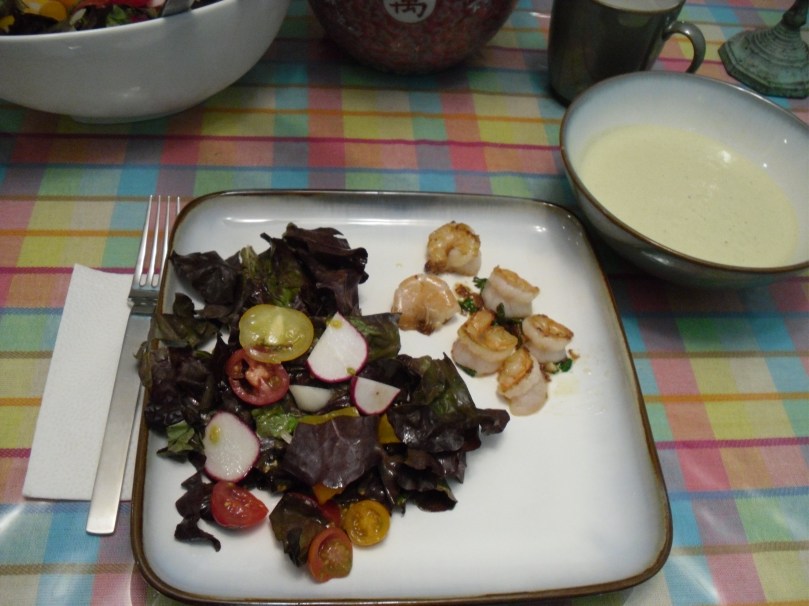
SDC10499.JPG

I want to talk about food and nutrition again. We’re coming up on Greenmarket season in New York City. Here you can use food stamps at a Greenmarket and there’s even an incentive for doing so. I think you should if you get food stamps buy fresh produce at a Greenmarket this time of year. Or year-round if a market is available in the winter.

The pasta is fresh angel hair pasta. The mussels are Newfoundland rope organic mussels. I order from an internet grocery that delivers. I had splurged for Mario Batali tomato sauce yet won’t do that again–it cost a ton of money for one jar.

I sloshed the mussels in red wine. You can fill a large saucepan with just enough water and place the mussels in the water. The water shouldn’t be so high that it goes into the shells. Steam the mussels for 25 minutes or so. Pour the wine over the mussels halfway through.

One time I was eating mussels in a restaurant. As you might know I’m Italian. So I’m eating the mussels and the woman at the table next to me tells the young girl with her: “Italians love their mussels.”

I was astonished. There I was Italian and I’m eating mussels.

The table decor is the spring tablecloth and vase and candlesticks. I firmly believe in changing your table decor at the start of every season. It can give a lift to your spirits.

I eat mussels. I have muscle. I doubt the two are connected. Yet enjoying good food  can improve your mental health too.


15-Year Advocate Anniversary

This year I’ve been a mental health advocate for 15 years.

In this time it feels like I’ve been preaching mostly to the choir.

I’ve been attacked when I claim that most people can recover.

This fall I’ll have been in recovery for 30 years. In the summer I’ll have been in remission–that is symptom-free–for 25 years.

I’ll be 52 in two weeks. I’ve taken some kind of pills for these 30 years. Today I take Geodon which has been a miracle drug. Before that I took Stelazine for the first 20 years. Neither drug caused weight gain.

I credit that fact that I recovered to my mother’s one courageous act to drive me to the hospital within 24 hours of my break. Luckily, I was admitted and given medication. Three weeks later when I was released the symptoms were gone.

In the time I’ve been an advocate since 2002 there has been some progress–thought most of us would think the progress has been limited.

Wherever I go when I give a talk it’s an honor and a privilege to connect with peers and family members who share common struggles.

I’ve been in the vanguard in terms of what I’ve written and spoken about recovery. No one else has quite yet reiterated what I’ve championed.

I credit having made fitness my number-one priority as having made all the difference in the last six years of my life.

On the cusp of 52 I believe fitness must rightly encompass body, mind, spirit, finances, relationships, and some kind of career–even if it’s just working on your recovery and not a paid job.

For years now I’ve hailed the work of the cheerful cashiers in Rite Aid. Unlike most people, I don’t care about status and I don’t think we should judge a person by whether they’ve achieved traditional markers of success.

Not everyone can and should aspire to become a J.D. or a famous writer. The peer support guideline tells us: “We expect a better tomorrow in a realistic way.”

I’ve learned in the last 15 years from some kinds of failure that expecting a better tomorrow in a realistic way is indeed the way to go.

Lynn Tesoro is quoted at the end of the Bobbi Brown book Living Beauty. I’ll end here with what she said. Tesoro doesn’t waste time focusing on what’s not achievable.

That wisdom if you ask me is the secret to success in recovery as well as life.

It’s far better to focus on what you can do and be and have.

Choosing Goals

It’s clear to me that you and I won’t succeed if we succumb to thinking we have to do what other people tell us is the only right thing to do.

It’s 2017 and we have more and better options for living in recovery.

You’re only going to make yourself miserable and have ill health pretending to be someone you’re not just so you can please other people.

We should not be puppets–either of our government or of anyone else who attempts to pull the strings to get us to conform to a so-called norm.

We will only succeed if we are invested in the goals we set and have the starring role in deciding what we want to do with our lives.

When a person says another person has a ton of self-determination that really means that this individual had the courage to go after getting what they wanted without being deterred by whatever obstacle they faced.

Self-determination sounds like a fancy word however as I define it it’s simply the right of everyone living on earth to determine how they want to live their life and the direction they want to go in in their life.

No other person should be telling us what to do without soliciting our feedback on this course of action. Any treatment plan needs to be created with our input.

Choosing our goals should be up to us first of all. Yet really we shouldn’t set the bar so high that we can only fail. The dilemma is that historically for people diagnosed with mental health conditions the bar wasn’t set at all. We weren’t expected to be able to do much of anything.

2017 is here. It’s time to challenge this status quo. It’s time to speak out on the things that matter to us.

I say: engaging in goal-seeking behavior can make all the difference in a person’s recovery.

Choose your goals with care and attention. Choose goals that make sense to you.

Discarding Goals

I firmly believe that everyone living on earth has the potential to do some kind of work.

For one person this might simply be doing volunteer work or working on their recovery. For another person yes this could be getting a JD.

We are not to frown on those of us who are less fortunate than we are in this regard.

In two months I’ll be 52 years old–and the older I get it’s become imperative to prioritize what I want to do. You too will turn 52 hopefully at some point if you haven’t gotten here now. Prioritizing goals at mid life is the way to go.

In keeping with setting priorities each of us should know that it’s okay to discard a goal or goals that don’t have the chance to be achieved.

At 52 life is getting shorter thus the requirement of choosing wisely what we focus on.

At 52 I’ve discarded a number of goals that used to burn brightly in my mind as things I really really wanted to do in my fifties.

You like I did will plan at 40 what you want to do in the future. Yet the view is different 12 years later at 52. Thus the beauty of discarding goals that weren’t meant to be.

This doesn’t mean you’ve failed just because you’ve quit wanting to do something. You can only fail at something you’ve actually done that didn’t turn out right. You can’t have failed if what you wanted to do you didn’t try to do to begin with.

Bingo–that’s the difference in succeeding at goal-setting–especially at mid life. When we give up focusing on one thing we can replace it with another thing.

Recovery is the gift of a lifetime that we give ourselves in which to heal and be whole and well and happy.

We cannot rush or cut corners when it comes to achieving our life goals. Better to have entertained a goal or two and not acted on it than to sit home throwing ourselves a pity party and not even trying to set a goal because we think we can’t.

Banish the word “can’t” from your vocabulary I tell you. Replace it with “I’m willing to try to see if I can do this.” That’s more like it even if not everything we try will always work out.

I want to continue to talk about setting goals. What I’ve written here is the short version. A book years ago was published that talked about the benefit of quitting.

The difference is: quit when it’s not to your advantage to continue. Persist when the goal is so life-changing that to not risk trying to achieve it would fill you with regret at “what might have been.”

The quote is: “It’s never too late to be what you might have been.”

The view from the cusp of 52 is grand.

Changeology

I’m in the middle of getting my second non-fiction book ready to publish soon. I hope to be able to publish this book within two years from now.

For now I would like to talk again about goal-setting.

It’s going to be spring soon and I think new season is the perfect time to make changes.

To this end I’d like to recommend a book–Changeology–about setting and achieving goals.

It’s a 5-Step process that has been scientifically documented in research as being effective in getting results.

The only drawback I find to the book is that it focuses only on changing negative behaviors like smoking and drinking and bad parenting.

You CAN use the book to create other behavior changes that are positive. You just won’t find your particular behavior talked about in the book. Yet you can still use this proven 5-Step process to execute change.

Using this system might indeed help a person stop smoking or drinking or overeating or whatever their unproductive habit is.

I will continue to talk about goal-setting in here in the coming blog entries.


Yes You Can

I’ve changed the quote at the top right of this blog.

Years ago circa 1989 when I was shunted into the day program a woman I met told me: “Not a lot of people with a disability could do what you do.”

It’s true that I took offense at this because I thought it was possible to do these things.

As of today the proof that Yes You Can really is that we are “individuals” living with a mental health challenge. Not “consumers” or “schizophrenics” or any other label.

Each of us has the potential to do the things that give us joy and happiness. Each of us has the potential to heal and have optimal mental health. Each of us has the potential to flourish doing what we love.

Harboring jealousy at other people isn’t the way to live our lives.

Today in 2017 I can adamantly rebut that woman’s decades-ago comment with this:

You don’t have to become an Ivy League lawyer or a famous writer to get on with  a happy, healthy, and fulfilling life after you receive your diagnosis.

That’s the distinction I’ve always made in the various incarnations of my blog:

Often our internal roadblocks limit us more than external factors.

The goal I dare say is to be happy and healthy–that’s the true aim of living in recovery.

Each of us gets to define what happy and healthy looks like for us in our own lives.

Again it goes back to what I’ve written about self-stigma. If you’re trashing yourself or someone else because they’re a cashier in Rite Aid, that’s NOT right.

The woman who commented to me that way in the mists of time was an exceptional baker. She could cook like you wouldn’t believe.

So if you are a creative chef creating culinary wonders that’s your version of happy and healthy.

I thought about this woman’s comment today because I was talking with my literary agent who’s as visionary as I am in championing mental health.

Years ago when I first started blogging I had the audacity to claim that most people could recover and go on to have your own version of a full and robust life.

Frankly I’m tired of so-called experts claiming that no one can recover. I’m tired of getting attacked because I choose to focus on on the positive instead of dwelling on symptoms and lack and deficits.

The point is: if you can bake a souffle you’ve got that over me.

Any questions?

Self-Advocacy

You shouldn’t ever apologize for your existence.

You shouldn’t feel that your diagnosis limits you forever.

I coached a guy who found out one of his top forty careers might be a race car technician.

I’m going to be excoriated for telling readers that we can’t always listen to what so-called experts advise us is the right thing to do.

They haven’t met us and aren’t living our lives. Only you and I know what’s the right thing to do on any given day.

You’re an equal partner with your treatment provider(s). You deserve and have the right to have input into the decisions being made about your life.

Today circa 2017 we have more options and better options for what we can do in recovery. If no option exists, you can create an option for yourself.

The Aveeno skincare advertisement gets it right: “The best way to predict the future is to create it.”

Each of us can create a life of our own design.

It’s our right to be self-advocates. You aren’t any longer relegated to being a passive recipient of services.

That’s why I always detested using the word consumer to describe a person. You consume soft drinks. You don’t consume healthcare.

I’m going to end here with this:

You diagnosis doesn’t limit your choices forever.

Yes you can.


Cigarette Smoking

We should each of us love each other and protect each other and our planet.

It’s because I care about everyone living on earth that I implore readers of my blog to resist the urge to start smoking cigarettes.

I’ve always detested cigarette smoking. From the time I was a young kid–easily only nine years old or so–I’ve detested cigarette smoking.

My mother and my aunts–her sisters–smoked two packs a day for forty years. No surprise–they now sleep and travel everywhere with oxygen tanks and use inhalers.

I judge no one living on earth. Good people often make the choice to start smoking cigarettes. Illness doesn’t discriminate–it strikes good people as well as evil people.

You will become disabled if you smoke cigarettes.

You’ll have to sleep and travel with an oxygen tank. If you care about vanity, and choose to smoke, you’ll get wrinkled early and lose your looks and have yellow teeth. Chances are, you’ll lose your teeth at some point and need false teeth.

If you do only one positive thing in your life and nothing else quit smoking if you’ve already started. Only doing this–quitting smoking–is the best thing you could ever do.

I’m losing my aunt now after losing my father to colon cancer in 2015. It’s unimaginable yet true–a good person taken out because she smoked cigarettes for 40 years.

You’ll think it’s over if you’re 60 and quit smoking yet you’ll remain in compromised health forever. Fare better to quite smoking at 30 than to smoke for your whole life. Yet I implore you to quit now even if you’re 60.

I don’t take this lightly. I don’t care if a person wants to stay at home watching TV all day. I don’t care if a person chooses jealousy or hate over love. I don’t care how anyone else lives their life.

I do care about health. I care that everyone living on earth has the chance to be healthy. I care that good people make bad choices.

It’s because I’ve seen the perils in my own family of smoking cigarettes that I implore readers now: resist the urge to start smoking cigarettes.

You don’t deserve to be hooked up to tubes, comatose, and barely breathing after you have an operation.

You don’t deserve to have limited romantic choices because no one wants to date a smoker.

You don’t deserve to add a smoking-related disability to the mental health disability you already have.

You deserve to have a long, healthy, prosperous life.

You deserve to meet the man or woman of your dreams.

You deserve to save money on your healthcare.

After all, why not make yourself rich instead of making Phillip Morris rich?

It’s something to think about dear readers.

If you smoke, the people who care about you are living in pain watching you make yourself ill. You’re not the only one you’re hurting by making yourself ill. Those of us who watch you light up are in agony too.

We care a lot.

I care and I haven’t even met you.

I’ll end here with the hope that you can read what I’ve written and take it seriously.

Numerous options exist for helping you quit.

You might not stay quit and it could take a couple of times.

Yet now is the right time to try.

I’m rooting for you dear readers.