Sacred Contracts

My mentor stayed clean for decades. I think he was motivated to live drug-free because he wanted more than anything to help people.

If you ask me figuring out your Sacred Contract–essentially your life purpose–can give you the motivation to stay healthy and care for yourself.

Caroline Myss believes our sacred contracts are life assignments given to us to carry out in this lifetime.

A client of hers is quoted in the book Sacred Contracts. Liza had dreamed she was in a small rowboat going in circles. She could see an ocean liner in the distance and wanted to be on that ship not stuck where she was. Liza had been paralyzed in an accident and had to makeover her career and her life.

To quote Liza: “The key is to learn to row the boat you were given.”

I recommend you buy these two Myss books. Any kind of self-improvement project that is healthy shouldn’t be frowned on. We should only be competing against how we were yesterday–not against what other people can do today.

I say: “No thank you” to critics who compare peers to people who don’t have MH issues. The size of another person’s ocean liner shouldn’t concern us.

In a coming blog entry I’m going to talk about The Myth of Competitive Employment.

The Life Work of Caroline Myss

Years ago I chanced upon the life work of Caroline Myss.

A book she wrote was reviewed in a women’s magazine. Archetypes: Who Are You? intrigued me after I bought and read it so I then bought her book Sacred Contracts.

Her discovery of a condition she called woundology has been accepted in the medical field. I wrote about woundology circa a year ago.

You might be skeptical of all this like a friend of mine was. I urge you to suspend your disbelief. The life work of Caroline Myss I’ve found to be as good as taking a career quiz in helping a person live authentically and thrive beautifully.

Everyone has four of the same archetypes: child, prostitute, saboteur, and victim. Each of us has eight unique archetypes for a total of 12 archetypes. You can cast a Chart of Origin where each archetype is inserted in one of the 12 houses of the zodiac.

Your 12 archetypal patterns are used to carry out the terms of your Sacred Contract. You might think this is all speculation or hooey or some kind of parlor trick.

Yet I’ve found this study to be immensely helpful. You might also think that limiting yourself this way is restrictive. It’s not because who among us would really want to spread our energies thin trying to do things we’re not suited for or that amount to busywork?

Homing in on your archetypes can actually bring emotional freedom if you ask me.

It might come as no surprise to loyal followers that three of my own archetypes are Author Advocate and Visionary.

You can go on the Archetypes website and take the quiz to discover your Top 3 Archetypes. The founder of the Archetypes website has changed around things a bit. Fashionista has been renamed Tastemaker.

So I wouldn’t rely totally on this website for an in-depth analysis of your archetypes. The woman who created the website linked to the Myss Archetypes: Who Are You? book has turned the site into a forum for selling products.

The woman who founded the archetypes website had originally founded philosophy the beauty products company years ago.

In the next blog entry I’m going to continue this talk with information about figuring out your sacred contract. This is the plan for your life’s purpose.

This kind of self-improvement project if you ask me can be an effective recovery tool as an adjunct to traditional treatment.

You can use this information along with taking a career quiz if you think it would help you.

Having a Plan B (And Plan C)

Your life can change after you get a mental health diagnosis. I’m here to say that though your life is different it can be better.

Having a Plan B when your Plan A doesn’t work out  is critical. You should also have a Plan C and D. Heck, you can have two plans going on at once.

In my twenties I had the dream of rising up to be a corporate Executive. That didn’t happen. So I went back to school to get a library degree. Now my goal of publishing the second book is taking longer.

No one has ever talked about how to proceed after a setback when you have a mental health thing. I’ll tell you here: you have to figure out if it’s the goal itself that is not right–or if the method for achieving the goal is wrong.

A nifty way for figuring out the life path you should go down might be met with skeptical response. Yet I firmly recommend studying the life work of Caroline Myss. She created a philosophy of Archetypes and Sacred Contracts.

Like what happened when I was in my twenties a lot of us pine to be someone we’re not. No–I wasn’t cut out to be an Executive–I didn’t have that archetypal pattern.

My theory is that when a person understands how their archetypal patterns interact they are better able to figure out what the right goals are to have if they want to succeed in life.

I’m going to talk about archetypes and sacred contracts in a coming blog entry.

Casting your Chart of Origin and analyzing how your archetypes express themselves through you might just be as helpful as taking any career quiz.

You’re Not an MD So Stop Giving Medical Advice

Chris Bruni is not an MD. I refuse to give medical advice.

Telling someone to discontinue their medication and offering a method to do so is practicing medicine without a license.

I’m not here to tell people what they should do. The story I tell–the only one I have to give–is my story. I can and will talk about how taking the SZ medication every day enabled me to be in remission for over 25 years so far.

A friend of mine who doesn’t have SZ I consider to be my soul mate. He discontinued his psych medication under supervision and is perfectly fine years later.

What gladdens me is that although he’s been successful he doesn’t give people medical advice. He thinks most people with SZ need to take medication.

My friend hasn’t attacked me–like so many anti-psychiatry folk have done–for choosing to take pills.

I want to be very clear to readers now: telling people they should discontinue their medication is practicing medicine without a license.

At this point I won’t even tell people they must take medication because as said I’m not an MD.

We can only share our stories with each other. It’s up to each of us to decide what we want to do.

If someone asked me I would tell them that I think discontinuing SZ medication is too risky to chance it. That’s my belief and my friend’s belief.

You can decide for yourself if this makes sense to you. You have the choice.

Yet I also think that choosing psychosis over health is a big mistake.

No one I know who discontinued their SZ pills got better. They started hearing voices again. (I’m lucky I didn’t ever hear voices.)

Yet even stating this I cannot tell you or anyone else what to do or how to do it.

I urge you if you’re a paid peer specialist as your job not to dispense medical advice without a license. You’re not an MD. You’re not licensed to diagnose and treat illnesses.

In the coming blog entries I’m going to talk about practical career information again.

My goal is to publish You Are Not Your Diagnosis in October 2018 which is Disability Employment Awareness Month.

Eat Well to Be Well

brussels sprouts scallops

Kettlebell Kitchen Brussels Sprouts with Scallops

Eating well is a form of self-nourishment. My ethic is to eat well to be well.

In New York City an online food ordering service has started up.

Kettlebell Kitchen markets to a health-conscious crowd.

That’s a slick marketing tool. You can pick up the meal packages in your gym or have them delivered to your house or apartment.

Beef is sold mostly as well as some chicken dishes and turkey dishes.

There’s not a lot of strictly vegetarian packages.

You can order an actual meal plan that is sent every week. Or you can go in and choose your own items as often as you want–every week, every other week, or twice a week and so on.

If you live in New York City and don’t like to cook using the Kettlebell Kitchen service can be cheaper and healthier than dining in restaurants all the time.

In the coming week I’ll be giving a healthful breakfast recipe.


The Myth of Meal Plans

bucatinipad thai

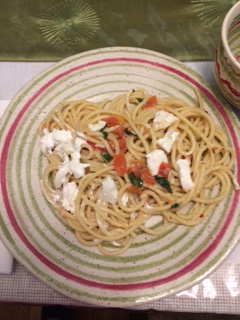
FreshDirect Meal Kits Above: Bucatini with Tomato and Burratini – left. Pad Thai – right.

The first trainer I had at a gym left to open up his own boutique gym.

I subscribe to his newsletter. In it he bemoaned the fact that new members of his gym expect him to give them a meal plan. He frowns on this.

Quite simply: if you want to lose weight you have to change what you eat. It might not be as simple as calories in versus calories out either.

The type of food you eat matters. Merely eating less of unhealthful food isn’t going to get you fit for the long-term.

Eating mostly whole foods is the ticket. Eating a mostly plant-based diet.

I align withe Forks over Knives movement. I only eat chicken and turkey not any other kind of meat.

The FreshDirect online delivery service in New York City sells meal kits like the ones above. All the ingredients come in a box and you prepare the recipe on your own.

I have more to say about eating well to be well. I’ll talk about this Eat Well to Be Well philosophy in coming blog entries.

People Have the Power

Individuals with SZ are seen as interchangeable with no identities of our own apart from the illness and its symptoms.

The reasoning goes: we’re not able to recover so why bother trying to help us do this if it’s impossible?

NO. That thinking doesn’t fly with me.

We should be trying to help people recover.

I don’t accept chronic disability as the fate of any human being.

My point exactly is that getting the right treatment right away can enable an individual to bloom–to do better–to be able to have a full and robust life.

I’m not a fan of the all talk and no action to create solutions MO of so-called normal people. They don’t have a vested interest in my life and health and in yours and other people’s who have MH issues.

I titled this blog entry “People Have the Power” because we have control over the dialogue. It’s also the title of my favorite Patti Smith song.

I’ve written before that I think no one we elect in government can ultimately ever do things to remedy societal ills.

So it’s up to each of us to take action to create the kind of life and health we want for ourselves.

It’s up to each of us to help each other.  Martin Luther King called this creative altruism.

I ask you:

Are you willing to remain silent?

Are you willing to accept chronic disability?

Are you willing to accept the status quo?

I’m NOT able to buy into the myth of helplessness and hopelessness.

There’s a better way: having the courage to speak the truth to power. Telling our stories.

Doing something to help those of us who WANT to recover have the OPPORTUNITY to recover.

The Shortest Guide to Mindfulness You’ll Ever Need

Years ago my shrink told me I should practice mindfulness.

No kidding–it’s not a trite concept and it’s not pop-psychology babble.

It works–mindfulness is a valid healing practice. How do I know this?

Having had a severe cold for one week was no joy. As I started to be on the mend I was able to do things. This inspired me to have a weekly mindfulness practice and to make mindfulness a daily habit too.

You don’t have to read a 300-page book on this topic.

Just read this one sentence: Mindfulness at its heart is simply paying attention to what you’re doing and not doing things on autopilot.

That’s all it is.

Thinking about mindfulness can conjure up meditation or another behavior that seems hard to implement successfully.

The truth is–there is no right or wrong way to do or to practice anything–just the way that works for you.

In terms of mindfulness, it can help to focus on the 5 W’s: the who, what, where, when, and why of what’s happening in your life at this particular moment.

Thich Nhat Hanh a famous monk author uses the classic example of washing dishes with awareness of what you’re doing.

Feel the plate and sponge in your hand. See and listen to the water.

Really experience what you’re doing instead of doing it mindlessly.

To this end I’ve started a mindfulness practice.

I was motivated to do this by the simple act of washing my makeup brushes when I had gotten over the severe cold.

Simply washing makeup brushes with care and attention can spark joy.

The truth is, if what you’re doing doesn’t spark joy and you don’t have to do it–I say stop doing it.

Stop doing busywork and start doing the things that are important to you and align with your values.

I’ve come to see the beauty and benefit of practicing mindfulness.

For women, I recommend hand washing bras and washing makeup brushes 1x/per week.

When I decided to practice  mindfulness it was like I was hit on the head with a piano falling from the roof of a building in a TV cartoon.

It occurred to me that mindfulness begets mendfulness. That to mind what we do can be the first step to mend what’s not working.

I for one don’t want to live my life on autopilot anymore.

Finding Your 5 Commitments

Years ago I read a book that Leo Babauta of ZenHabits wrote.

In it he urged readers to make a list of their 5 commitments.

Limiting the focus of your life to 5 things was appealing.

What saved me?

Art and Music and Fashion and Writing and Exercise.

These 5 things were and always will be integral for  enabling me to recover as fully as I have.

What are your Top 5 commitments?

Find what gives you joy and go do that.

I wouldn’t be so quick to be pessimistic and give up.

I wouldn’t be so quick to throw yourself a pity party.

I wouldn’t be so quick to be jealous or envious of another person or to compare yourself to them.

I think EVERYONE living on earth has good traits and God-given gifts.

None of us is any better than anyone else.

We each of us need to believe in ourselves first of all–to take pride in who we are not what we are able to do.

Not being able to hold a job doesn’t preclude a person from being able to do other things.

It goes back to the concept of woodshedding when you’re in a plateau and in a valley not on a peak.

I wrote about woodshedding in one of the first blog entries I posted here over three years ago. This is a term taken from the jazz world where musicians would go into a woodshed or other private space to practice their instrument until they could perfectly play the piece or had greatly improved.

That’s what the early years of recovery are often like: we could require solo time to rest and reflect so that we can heal.

I would say that hibernating in your apartment for years and years isn’t healthy. Yet going off to be by yourself when you need to rest and recuperate might help.

Practicing woodshedding when it could help you to do so is one tactic for making productive use of a plateau when you’re in a valley not on a peak.

Focusing on limiting yourself to 5 Commitments might also help you.

In the coming blog entry I will talk about another technique that I find useful in recovery.

Here’s a link to the ZenHabits blog.

Recovery for Everyone

I’m an Author Advocate and Visionary.

I believe in my vision of “Recovery for Everyone.”

Recovery is not and cannot be a one-size-fits-all proposition.

Today I realized the dilemma I face in championing recovery for everyone:

Not everyone WANTS to recover. I found this out on Monday.

It seems hard to believe – yet I have met a person who doesn’t want to recover.

If you’re basing “recovery” on becoming a CEO like a friend of mine did you’re setting yourself up for an impossible standard.

The point of recovery is not to achieve status in the world with a traditionally accepted job or relationship or lifestyle.

Rather the goal if you ask me is: “To Thine Own Self Be True.”

Recovery is possible when you first like yourself and are willing to go down your own path to get to where you want to be.

If you ask me it’s a realistic not just noble goal to want to do a little better and be a little better every day.

I will always get flak. It’s because I’m a Visionary who dares think recovery is possible.

What I know to be true–that having your own version of a full and robust life in recovery is possible–is often not accepted in the mainstream. My critics don’t accept this view of what’s possible.

Wanting or expecting to become a CEO isn’t in the cards for every one of us.

Yet whatever our individual limitations are we can and should develop “work-arounds” to make our lives as happy and healthy as they can be.

I will go to my grave championing that getting the right treatment right away results in a better outcome.

Getting the right treatment right away has the potential to halt or totally stop disability in its trajectory.

Need I say more?

Yet regardless of the degree of disability that any of us face:

I say giving up hope is a mistake.

I’ll talk more about getting the right treatment right away in the next blog entry.